How to Launch an Online Store in 7 Days
How to Launch an Online Store in 7 Days
One of the biggest misconceptions I see among business owners is the belief that launching an online store is a long and complicated project. Many people think they need months of planning, a large budget, professional photographers, a development team, and thousands of products before they can start selling online. I used to think in a similar way when I first entered ecommerce. Looking back now, I realize that this mindset delays more businesses than any technical challenge ever could.
Over the years I have spoken with hundreds of business owners across the UAE. Some operate retail shops. Some run furniture businesses. Others own workshops, trading companies, electronics stores, or service businesses. Many of them have been thinking about launching an online store for years. They know customers are buying online. They know the market is changing. They know competitors are becoming more visible online. Yet they continue postponing the decision because they believe they are not fully ready.
The reality is very different.
Most businesses already have everything they need to launch an online store. They already have products. They already have suppliers. They already have customers. They already have business knowledge. What they need is a practical roadmap and the confidence to start.
If I were launching a new online store today, knowing everything I have learned from operating ecommerce businesses, warehouses, retail stores, and managing thousands of products, I would focus on speed rather than perfection. The goal is not to build the perfect store in seven days. The goal is to launch, start learning, and improve continuously.
The Mistake That Delays Most Businesses
When I first started selling online, I believed everything had to be perfect before launch. I spent time worrying about product descriptions, logo designs, banners, layouts, categories, and hundreds of other details. The problem with this approach is that customers cannot buy from a store that does not exist.
Many business owners spend six months planning a store that could have been launched in one week. During those six months, competitors continue selling, customers continue buying, and opportunities continue passing by.
The businesses that grow fastest are usually not the businesses with the most perfect launch. They are the businesses that start early and improve along the way. Every successful ecommerce operation I have been involved with evolved after launch. New categories were added. Better photos were uploaded. Improved content was created. Processes became more efficient. Growth came from continuous improvement, not from waiting for perfection.
Day 1: Decide What You Will Sell
The first day should be dedicated to clarity. Before thinking about technology, payments, or marketing, you need to know exactly what products you want to sell. One mistake I often see is businesses trying to launch with every product they have ever stocked. This creates unnecessary complexity and delays the project.
When we started selling online, many of our best results came from focusing on products that already had proven demand. Instead of uploading thousands of products immediately, choose the products customers already buy from you. These products already have a market. They already have customer interest. They already generate revenue.
Your goal on the first day is not to build a catalog. Your goal is to identify the products that deserve to be online first.
Day 2: Organize Your Products and Inventory
Once you know what you will sell, the next step is organizing your information. Every product should have a name, price, image, and available stock quantity. This sounds simple, but it is often where businesses discover how disorganized their product data has become over the years.
One lesson we learned while managing large inventories is that organization saves enormous amounts of time later. A well-structured catalog makes it easier for customers to find products and easier for staff to manage orders. Whether you have twenty products or two thousand products, creating a clear structure from the beginning will help your business scale much more smoothly.
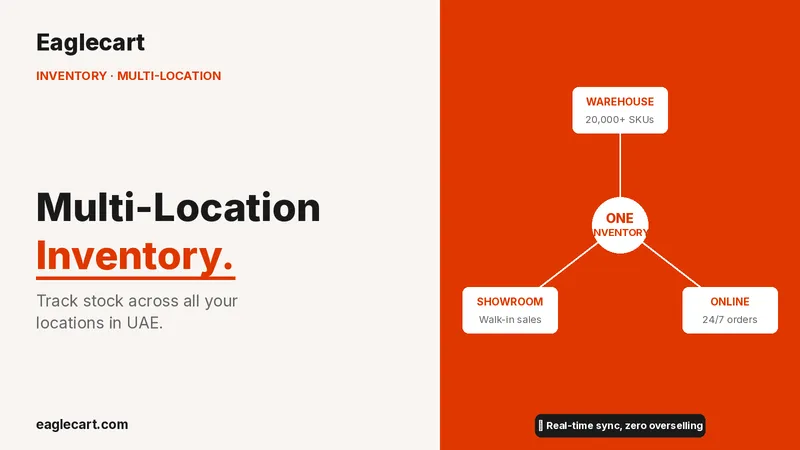
This is also the stage where many businesses realize the importance of having inventory and online sales connected together. Selling products is easy. Knowing exactly what is available, what has been sold, and what needs replenishment is where long-term success comes from.
Day 3: Build Your Storefront
The third day is where your business becomes visible online. This is the day your online store starts taking shape. You add your logo, business information, product categories, banners, and basic pages. Many business owners worry too much about design at this stage. Customers care far more about finding products and understanding what you sell than they do about complex design features.
Over the years I have seen simple stores outperform beautiful stores because customers could easily navigate them and complete purchases. The objective is to make it easy for customers to browse, trust your business, and place an order.
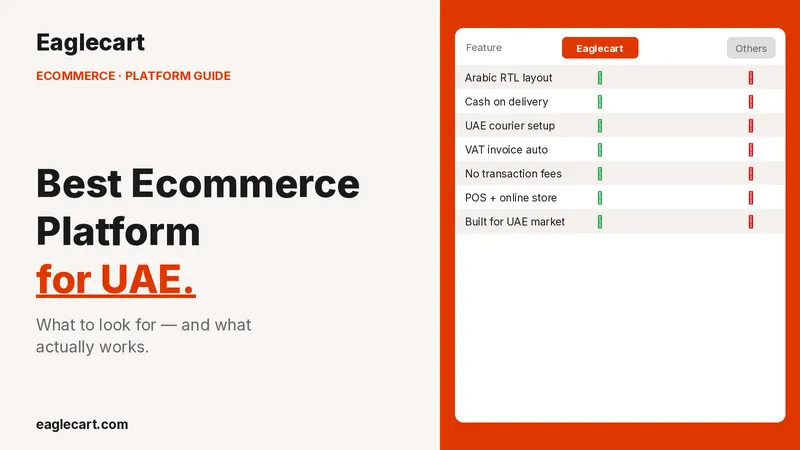
This principle heavily influenced how Eaglecart was built. We wanted businesses to focus on selling rather than spending months trying to build a website from scratch. A store should help a business grow, not become a project that never gets completed.
Day 4: Add Payment and Delivery Options
One reason many online stores fail to generate sales is because they make buying difficult. Customers want simple payment methods and clear delivery information. The easier you make the purchasing process, the more likely customers are to complete their orders.
When we started selling online, we quickly learned that customer confidence increases when payment and delivery information is clear. Customers want to know how they will receive their products and what options are available to them. Uncertainty creates hesitation, and hesitation often leads to abandoned purchases.
The fourth day should focus entirely on making sure customers can buy easily and understand exactly what happens after they place an order.
Day 5: Test the Entire Customer Journey
One of the most valuable lessons I learned from ecommerce is that business owners often see their stores differently than customers do. What appears obvious to the owner may be confusing to a customer seeing the store for the first time.
Before launching, place test orders yourself. Browse products as if you were a customer. Add products to the cart. Complete the checkout process. Confirm that emails, invoices, and notifications work correctly. Review the experience from beginning to end.
This testing process often reveals small problems that would otherwise affect customer confidence. Fixing those issues before launch creates a much stronger first impression.
Day 6: Tell Existing Customers
One of the biggest mistakes new online stores make is assuming they need advertising immediately. In reality, your first customers are often people who already know your business.
When we launched new products and services, some of our earliest sales came from existing customers. They already trusted the business. They already knew the products. They simply needed to know that a new sales channel was available.
Inform your current customers that your online store is live. Share it through WhatsApp, social media, email, and direct conversations. Existing customers often become the foundation upon which future growth is built.
Day 7: Launch and Start Learning
The seventh day is launch day.
This is where many business owners become nervous. They worry that something is missing. They worry that the store is not perfect. They worry that competitors have better websites.
The truth is that every successful ecommerce business starts imperfectly.
The important thing is to start.
Once customers begin visiting your store, they will show you what needs improvement. Some products will sell better than expected. Some categories will require adjustment. New opportunities will appear that you never anticipated.
The businesses that succeed online are usually the ones that learn fastest, not the ones that launch perfectly.
What Happened After We Stopped Thinking Like a Shop
One of the most important mindset changes in our business happened when we stopped thinking of ourselves as a physical shop and started thinking of ourselves as a business that could serve customers anywhere. That change eventually helped us expand beyond the limitations of a single location and build systems capable of supporting significant growth.
Launching an online store is not simply about creating a website. It is about opening a new sales channel. It is about reaching customers who would never walk through your door. It is about creating opportunities that do not depend on location, foot traffic, or business hours.
That is why I believe every business should start as soon as possible. The sooner you launch, the sooner you start learning. The sooner you start learning, the sooner you start growing.
Why We Built Eaglecart
After years of operating ecommerce businesses, managing warehouses, processing orders, and building internal systems, I noticed that many business owners faced the same challenge. They wanted to sell online, but they were overwhelmed by technology, multiple software systems, and complicated setup processes.
Eaglecart was built to remove those barriers. Instead of spending months connecting different tools together, businesses can launch an online store, manage products, track inventory, process orders, and handle daily operations from one platform. The goal was not to create another website builder. The goal was to create a platform built around real business workflows and real operational experience.
Launching an online store should not take months.
For most businesses, it can start in days.
Start Your Free Account Today
If you are ready to launch your online store, manage your inventory, process orders, create quotations and invoices, or run your entire business from one platform, now is the perfect time to get started.
Eaglecart was built from real business experience and designed to help businesses grow without the complexity of managing multiple systems. Whether you are starting a new business or scaling an existing one, Eaglecart gives you the tools to sell, manage, and grow with confidence.