Best Ecommerce Platform for UAE Businesses

Best Ecommerce Platform for UAE Businesses
Why Do So Many UAE Businesses Struggle Even After Launching A Website?
A few months ago, I was sitting with a business owner in Sharjah who proudly showed me the website he had invested months building. The design looked professional, the products were organized properly, and customers were already placing orders. From the outside, it looked like a successful ecommerce business. However, the longer we talked, the more I realized that the website was not solving his biggest challenges. Customer conversations were happening on WhatsApp, inventory was tracked in Excel sheets, invoices were created using a separate application, and whenever somebody asked whether a product was available, a staff member had to physically check the warehouse before providing an answer. The business had a website, but it did not have a system.
This is a situation I have seen many times across Dubai, Sharjah, Ajman, and Abu Dhabi. Many business owners believe they need an ecommerce website when what they actually need is a way to manage their entire operation. A website helps customers place orders, but running a profitable ecommerce business requires much more than accepting payments online. Once orders start increasing, the real challenge becomes managing inventory, customer information, purchasing, deliveries, quotations, invoices, and daily operations without creating confusion inside the business.
Is A Website Really The Most Important Part Of An Ecommerce Business?
When I first entered ecommerce, I also believed that the website was the most important asset. We spent countless hours improving product pages, updating banners, organizing categories, and optimizing the checkout experience. Every improvement felt valuable because the website was the part customers could see. As the business grew, however, I learned that most operational problems had nothing to do with the website itself.
The challenges were happening behind the scenes. Customer service teams needed access to accurate inventory information. Purchasing teams needed visibility into stock levels. Warehouse teams needed clear picking and packing workflows. Management needed reliable reports to make decisions. None of these challenges were solved by changing the homepage design. The website was simply the front door. The real business operated behind that door, and if the systems behind it were weak, growth became difficult regardless of how attractive the website looked.
Why Do UAE Customers Prefer WhatsApp Before Placing An Order?
One thing I have learned after years of selling online in the UAE is that customer behavior here is different from what many international software companies expect. A customer does not always discover a product, add it to a cart, and complete checkout immediately. More often, they discover the product through Instagram, Facebook, TikTok, Google, or a recommendation from a friend. Before buying, they send a WhatsApp message asking whether the item is available, requesting additional photographs, checking delivery costs, confirming sizes, or asking about payment methods.
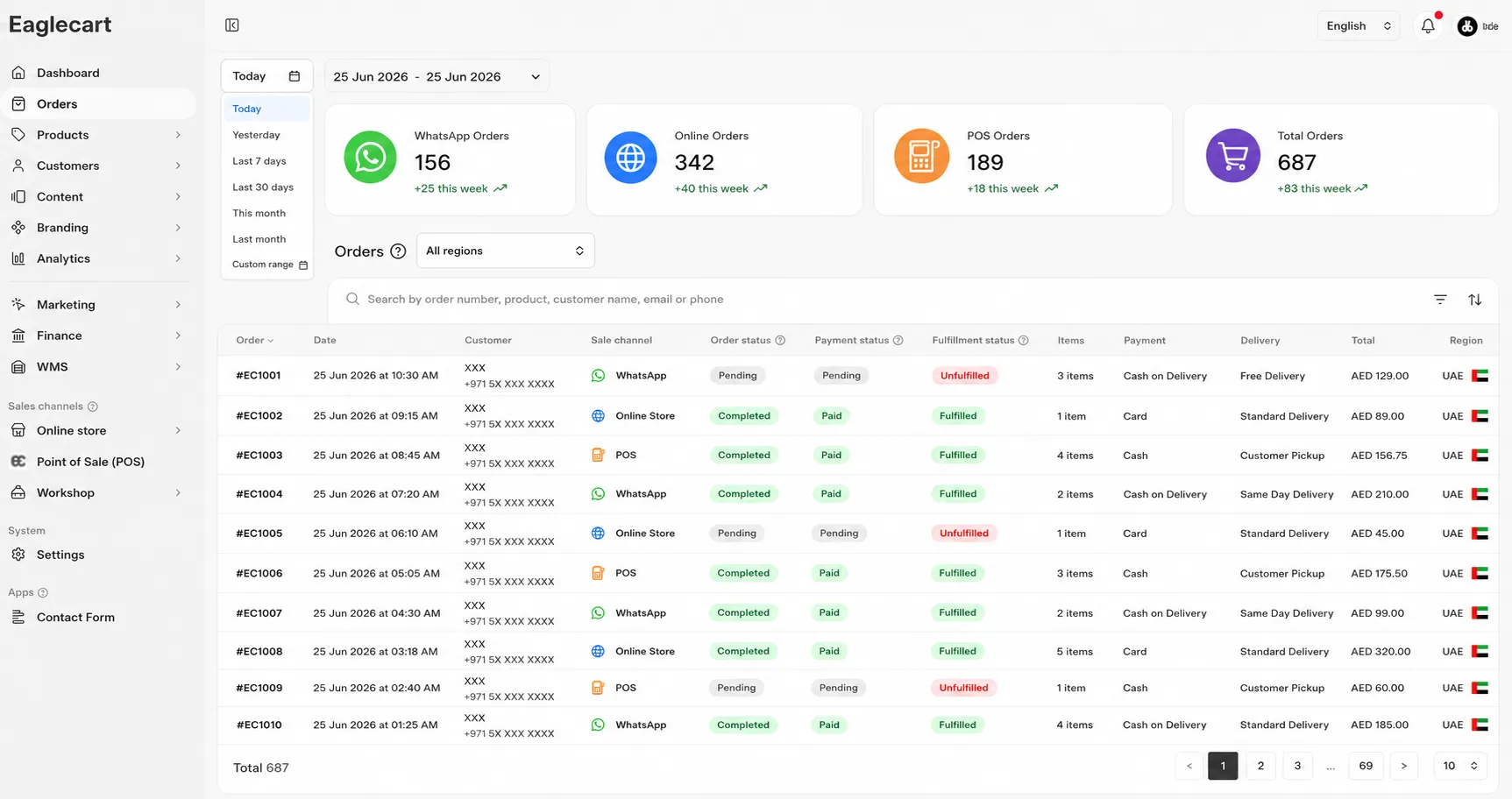
For many small businesses, WhatsApp has become much more than a communication tool. It has become the sales counter, customer service desk, support center, and follow-up department all at the same time. The challenge appears when customer conversations remain disconnected from the rest of the business. Staff members should not have to switch between WhatsApp, inventory software, spreadsheets, and invoicing systems simply to answer a customer question. Customer conversations should be connected to customer history, inventory availability, quotations, and orders so that information is available immediately.
What Happens When Your Business Grows Beyond 10 Orders Per Day?
Managing ten orders per day is relatively simple. Most business owners can remember which products are available, which customers have pending payments, and which suppliers need to be contacted. As order volume increases, however, manual processes quickly become unreliable. What works for ten orders often becomes a problem at fifty orders and a disaster at one hundred orders.
Inventory starts becoming inaccurate because updates are delayed. Customer service teams spend more time solving problems than creating sales. Purchasing decisions are based on assumptions instead of real data. Deliveries become slower because staff are searching for information across multiple systems. The business owner feels busier than ever, but productivity does not improve. Growth should make a business stronger, but without proper systems, growth simply exposes weaknesses that already existed.
Why Do Inventory Problems Cost More Than Most Business Owners Realize?
One of the most important lessons I learned from ecommerce is that inventory is not simply stock sitting on a shelf. Inventory is cash. Every product occupying warehouse space represents money that has already been invested. When inventory records become inaccurate, the consequences affect every department inside the business.
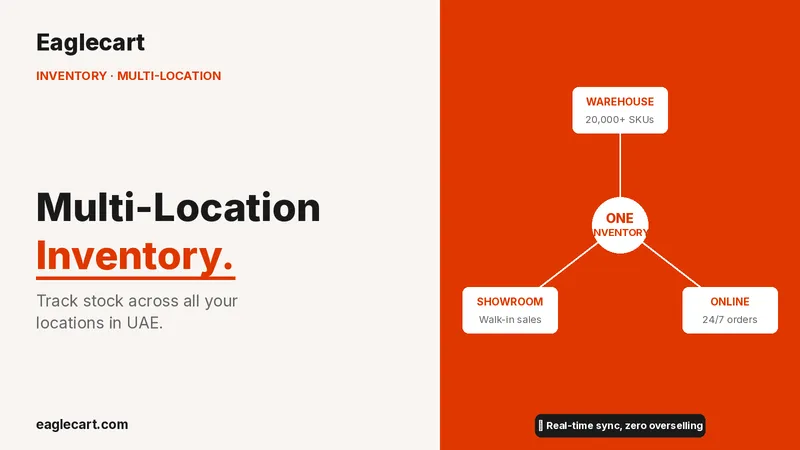
Customers order products that are unavailable. Staff waste time searching for items. Purchasing teams order products that are already sitting in another location. Deliveries become delayed. Customer confidence starts to decline. Most business owners focus heavily on increasing sales, but inventory accuracy often has a greater impact on profitability than marketing campaigns. The larger the catalog becomes, the more important inventory visibility becomes. A serious ecommerce business needs inventory management that connects products, locations, warehouses, sales channels, and purchasing decisions together.
How Do Most Small Businesses End Up Using Five Different Systems?
Most businesses never plan to create complexity. It usually happens gradually. The company starts with a website. Later, separate invoicing software is introduced. Then inventory becomes difficult to manage, so another application is added. Customer information ends up somewhere else. Purchasing is managed through spreadsheets. Communication happens on WhatsApp. Before long, the business owner is paying for multiple subscriptions while still struggling to get accurate information.
I have met many business owners who spend more time moving information between systems than serving customers. Reports become unreliable because different systems contain different data. Employees develop their own workarounds. Nobody is completely sure which numbers are correct. The problem is not the software itself. The problem is that the software was never designed to work together.
What Should The Best Ecommerce Platform Actually Manage?
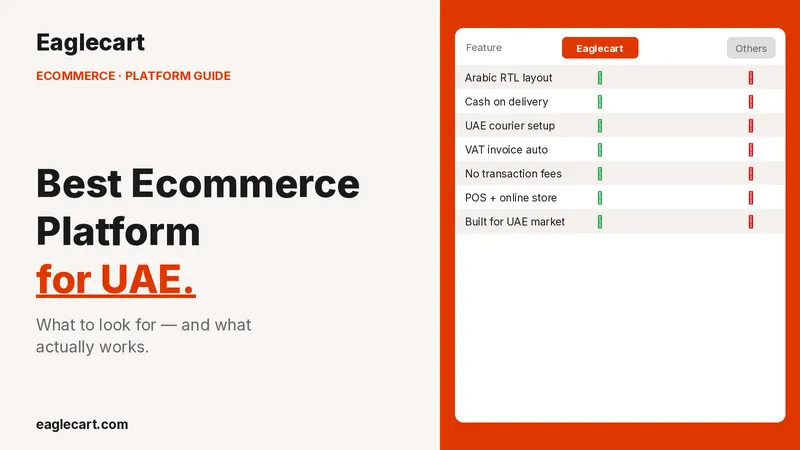
When somebody asks me what the best ecommerce platform for UAE businesses should do, my answer is always the same. It should help manage the entire business, not just the website. A business owner should be able to manage customers, products, inventory, multiple locations, quotations, invoices, VAT calculations, purchasing activities, orders, and customer communication from one place.
Customer history should be available instantly. Inventory should update automatically whenever a sale is made. Purchasing decisions should be based on accurate stock information. Staff should be able to answer customer questions without opening multiple applications. Most importantly, management should have complete visibility into the business without relying on spreadsheets and manual reports. The goal should always be simplicity because growing a business is already difficult enough without fighting software every day.
Why Did We Decide To Build Eaglecart?
Eaglecart was created because we spent years facing these same challenges ourselves. We operated ecommerce businesses, managed warehouses, opened retail stores, built customer service teams, and handled thousands of products. Every challenge forced us to build another internal solution because we could not find software that matched how our business actually worked.
Over time, we realized that many businesses across the UAE were facing exactly the same problems. They did not need another website builder. They needed a platform where the website, inventory, customers, quotations, invoices, purchasing, warehouse operations, and daily business activities could all work together. The goal was not to create another ecommerce platform. The goal was to create a business platform that helps owners stay in control as their companies grow.
So What Is The Best Ecommerce Platform For UAE Businesses?
The best ecommerce platform is not the platform with the most attractive templates or the longest feature list. The best platform is the one that helps business owners manage customers, inventory, purchasing, quotations, invoices, VAT, locations, communication, and operations from one place. As businesses grow, visibility and control become more valuable than website design alone.
For UAE businesses, ecommerce is no longer just about selling products online. It is about managing an entire operation that may include WhatsApp orders, website sales, social media inquiries, warehouse inventory, customer service, purchasing, and physical retail locations. The businesses that succeed are usually the ones that bring all of these activities together into a single system rather than managing them separately.
That is why I believe the future belongs to platforms that help business owners run their entire business from one place instead of simply helping them build a website.
Start Free
Whether your orders come from WhatsApp, Instagram, TikTok, your website, or your physical store, Eaglecart helps you manage everything from one platform so you can spend less time managing systems and more time growing your business.