What Is a POS System, and Does a Small Business in UAE Need One?
A POS system — short for point of sale — is the software you use to sell to a customer who is standing right in front of you. It rings up the items, takes the payment, prints or sends a receipt, and lowers your stock count on its own. If you run a shop, showroom or counter in the UAE and you are still billing by hand or using a basic cash register, a POS system is usually the first upgrade worth making.
For most UAE retail businesses, the honest answer to "do I need one?" is yes. The moment you are selling in a shop and online at the same time, or you have more than one person on the till, billing by hand starts quietly costing you money. And a modern POS does more than replace a cash register — connected to your online store, it shares one stock number, which quietly opens a second way to sell.
I learned the stock part the hard way. When we opened our retail showroom in 2022, I already had years of ecommerce behind me — the online store, the warehouse, thousands of products. I assumed the shop would be the easy part. It was not. On the busy days, the shop counter and the online store were working off two different stock numbers. A customer would ask for an item the system said we had, and it had already sold online an hour earlier. That gap — between what you think you have and what you actually have — is exactly what a proper POS system closes.
Key Takeaways
- A POS system rings up sales, takes payment, prints receipts, and updates your stock automatically.
- If you sell in a shop and online, or have more than one person on the till, you need one.
- Connected to your online store, a POS shares one stock number, so a shop sale and an online order never clash.
- Eaglecart POS runs on phone, tablet and desktop, issues VAT tax invoices, and works in Arabic and English.
What does a POS system actually do?
A POS system handles the full sale from start to finish, so you are not juggling a calculator, a notebook and a separate stock list. In practice, it does five jobs every time you make a sale.
It finds the product, either by searching the name or scanning the barcode. It builds the cart and works out the total, including VAT. It takes the payment and calculates the change. It prints or sends the receipt. And it records the sale and drops that item from your stock, so your numbers stay honest without you touching them.
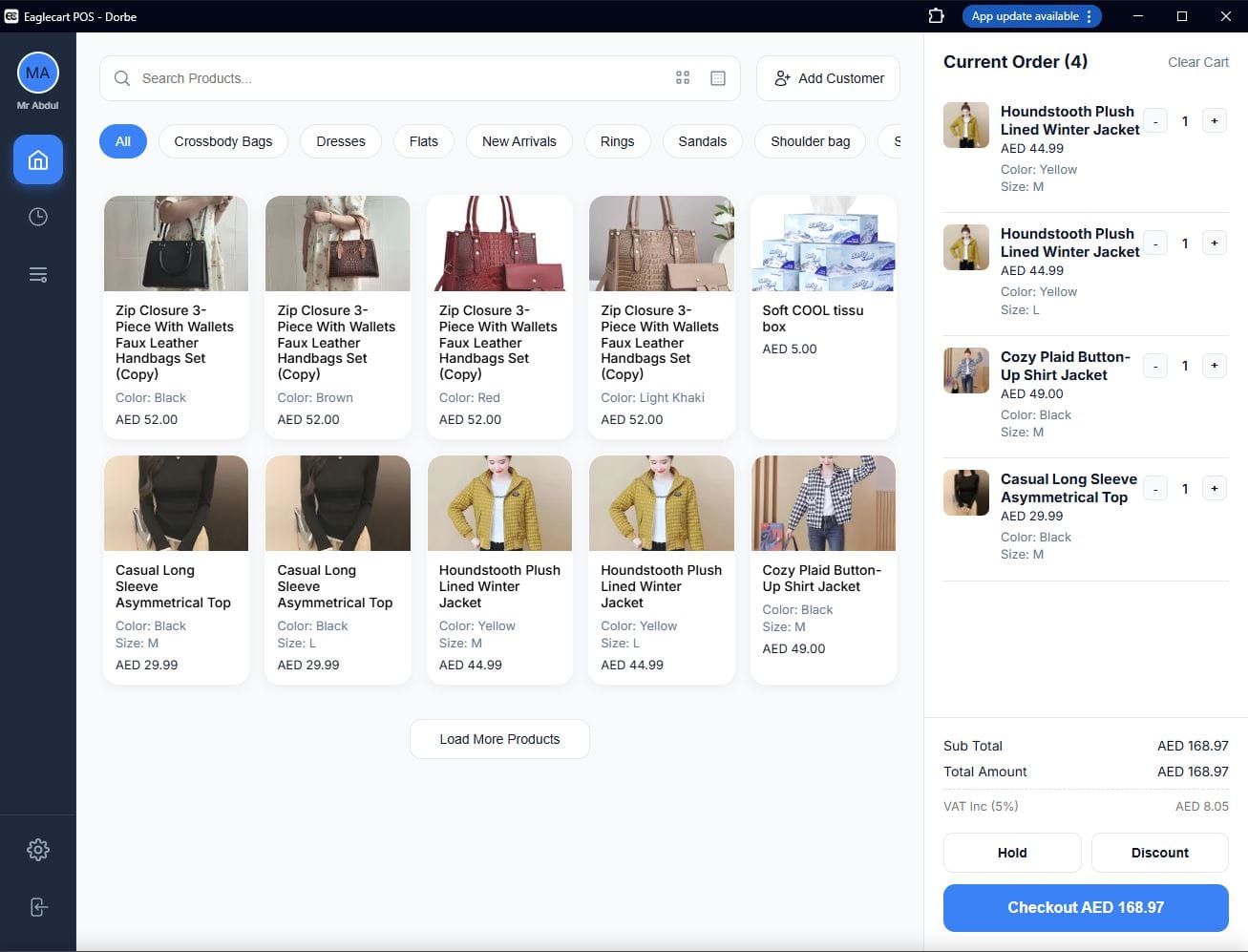
Do that fifty times a day by hand and mistakes are guaranteed. Let the system do it and every sale is priced right, taxed right, and counted right.
Do you really need a POS system for a small business in UAE?
You need one the day your billing stops being simple. If you only ever sell one or two items a week to friends, a notebook is fine — but almost no real shop stays there.
The clear signals are these: you sell in a physical shop and online, so your stock has to match in two places; you have staff on the till and need to know what was sold and by whom; customers expect a proper VAT tax invoice; or you simply cannot answer "how much did I sell today?" without adding it up by hand. Any one of those is enough reason to move on from manual billing.
POS system vs manual billing: what actually changes
The difference is not just speed, though a POS is far faster. The real change is that your stock and your sales stop being guesses.
With manual billing, every sale is a separate act of remembering — write the price, add the VAT in your head, tear off a receipt, and hope you remember to reduce the stock later. With a POS, all of that happens in one tap.
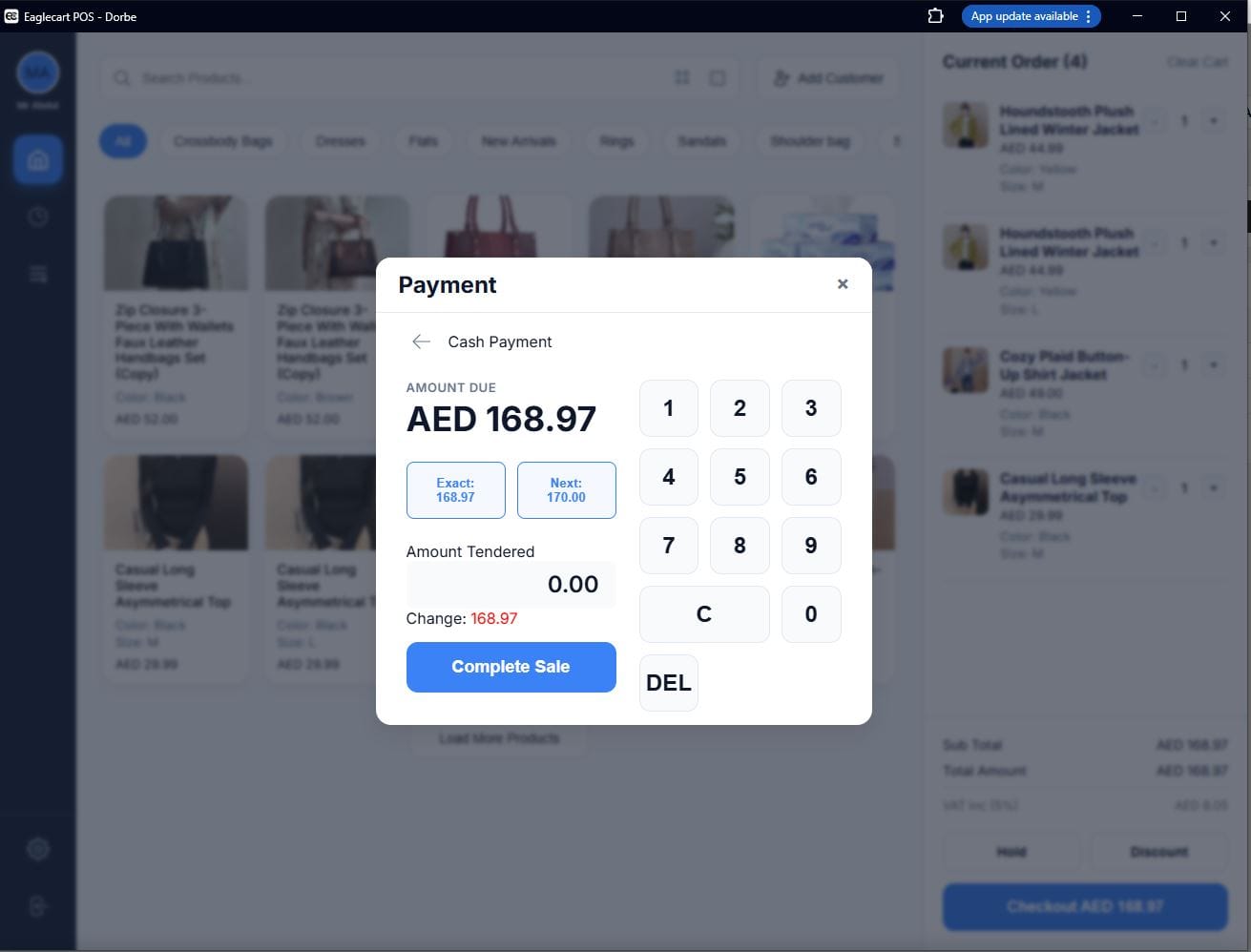
Three things improve immediately: fewer pricing and tax errors, a stock count that actually matches the shelf, and a clear record of every sale you can look back on at the end of the day.
A POS today is more than a cash machine
This is the part most shop owners have not caught up to yet. When your POS is connected to your online store, the same stock that runs your counter also runs a website customers can order from — including the ones who never walk in.
Think of a small shop with residential towers around it. With a connected system, the people in those buildings can open the shop's website and order what they need, and because the shop and the website share one stock number, an online order and a counter sale can never sell the same last item twice. Your POS stops being a machine that only serves the person at the till, and becomes the engine behind a second, quieter sales channel. How that delivery loop actually runs — order, packing slip, doorstep, cash, done — is a whole topic on its own, and worth its own read.
What to look for in a POS system in the UAE
Not every POS system is built for how business works here. Before you commit to one, check it handles the four things a UAE shop cannot do without.
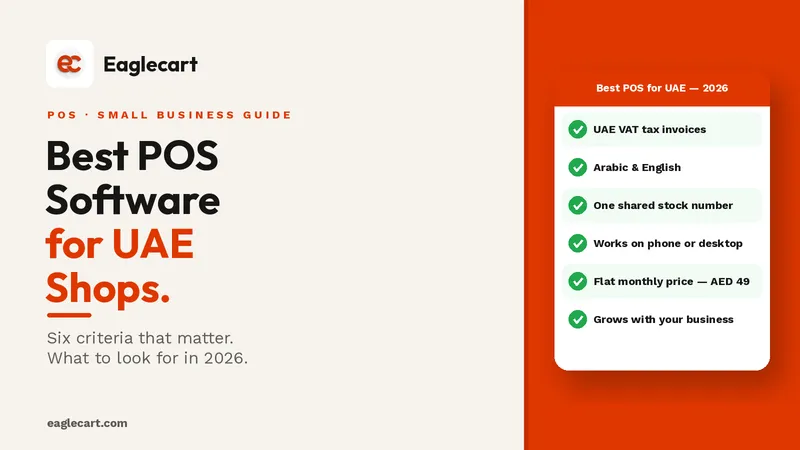
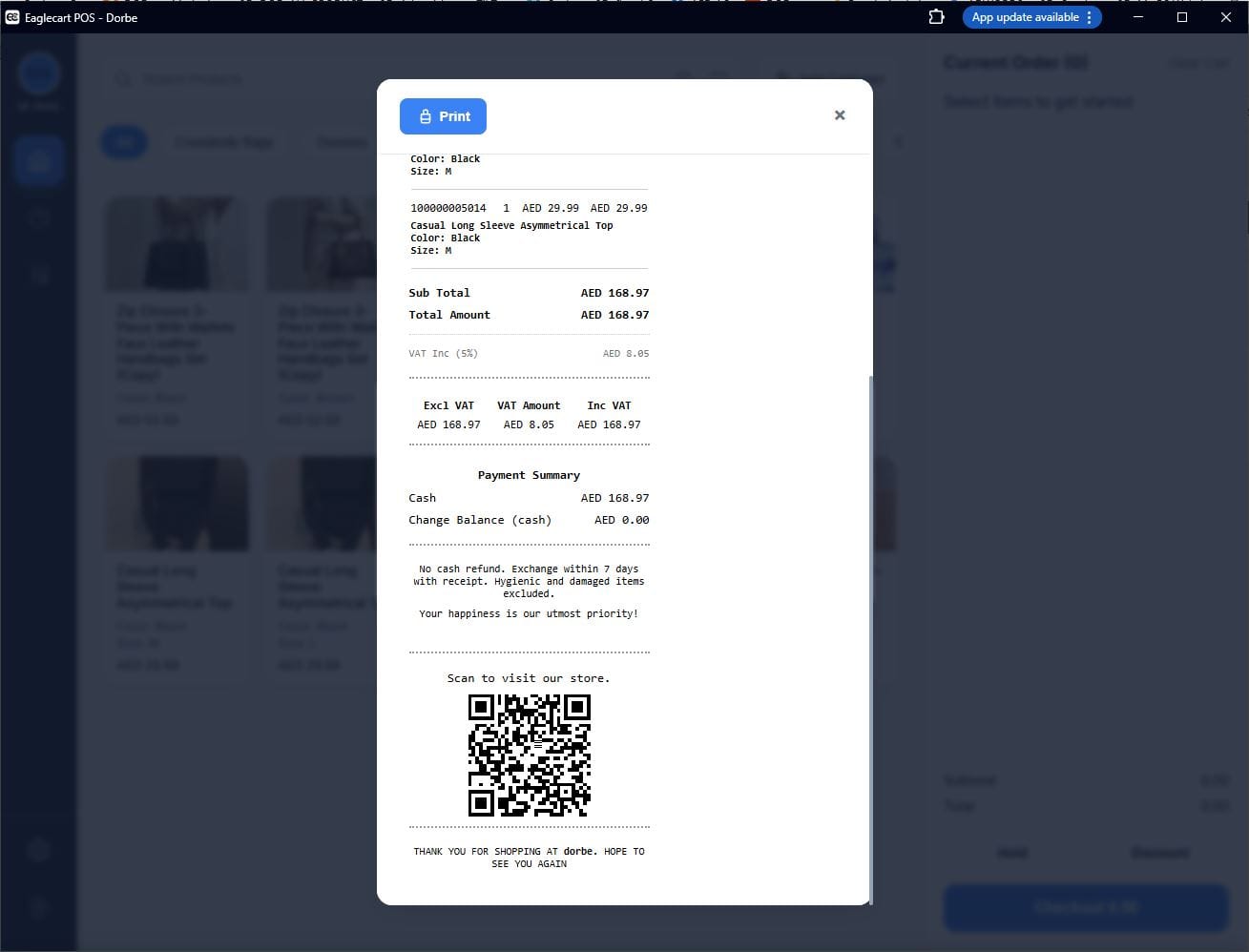
First, VAT tax invoices — the receipt should show the 5% VAT clearly and count as a proper tax invoice. Second, Arabic and English, because your customers and your staff are not all the same language. Third, one shared stock number, so a sale in the shop and a sale online draw down the same inventory instead of two separate lists. Fourth, it should run on the hardware you already have — a phone, a tablet or a desktop — rather than forcing you to buy an expensive dedicated machine before you have even made a sale.
How Eaglecart POS fits a UAE shop
Eaglecart POS was built by someone who stood at the counter first and wrote the software second. It covers the core retail work directly: retail checkout, product search, barcode scanning, payment collection and receipt printing, with inventory synchronization so the shop and the online store share one stock number.
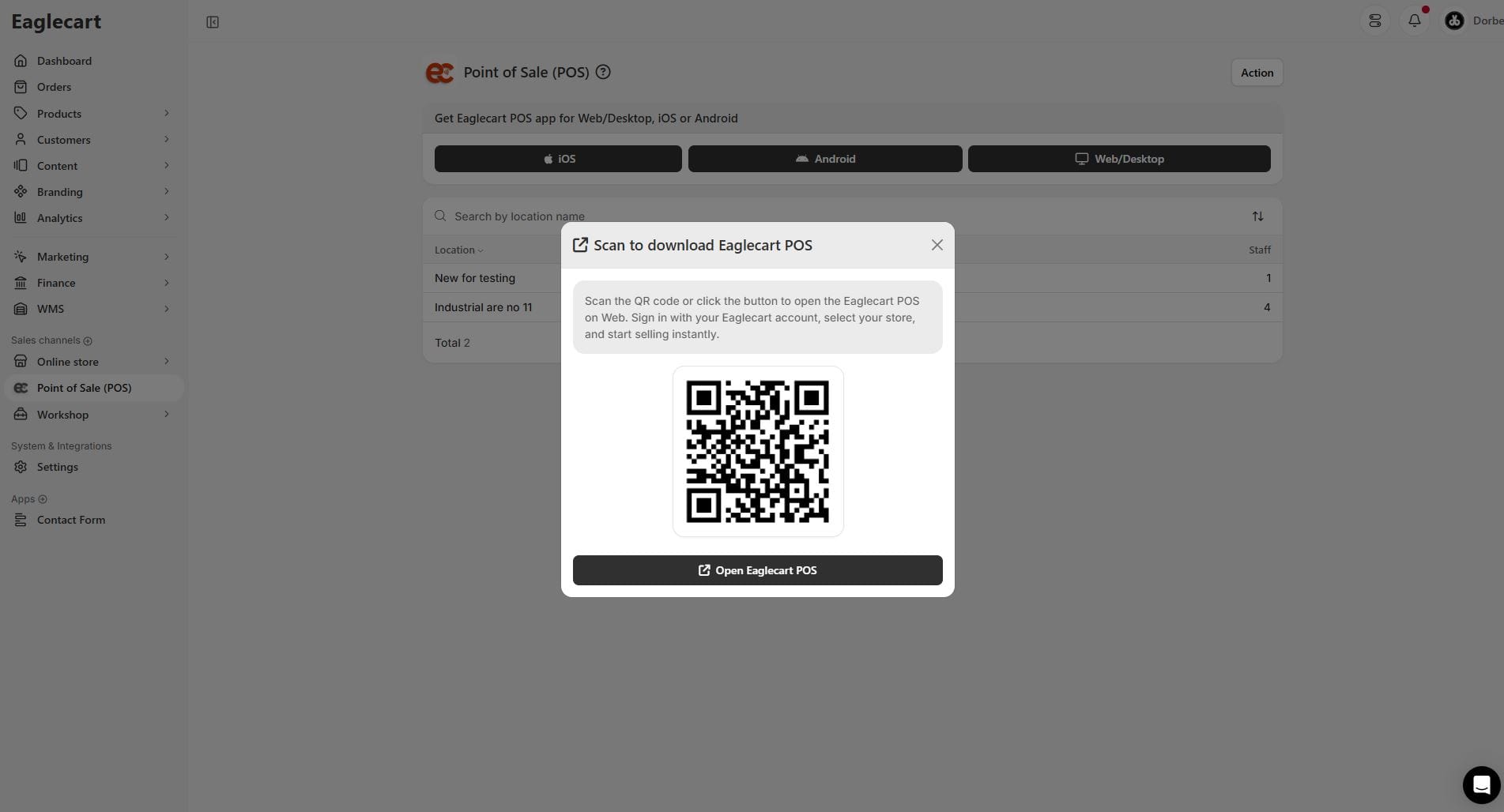
It runs on web and desktop, iOS and Android, so you can sell from a proper counter or from a phone in your hand. It issues VAT tax invoices, works in Arabic and English, and connects to the same products, customers and stock you already manage in your Eaglecart dashboard. Nothing lives in a separate silo — the sale you make at the till and the order that comes in from your website are part of the same business, not copies of it.
Frequently asked questions
What is a POS system in simple terms?
It is the software that handles a sale to a customer in front of you — pricing the items, taking payment, printing a receipt and updating your stock. Think of it as a smart replacement for a cash register and a notebook combined.
Does a small shop in UAE really need a POS system?
If you sell in a shop and online, have staff on the till, or need proper VAT tax invoices, then yes. Manual billing works until your business gets busy, and then it starts causing errors and lost stock.
Does a POS system handle VAT in the UAE?
A good one does. Eaglecart POS shows the 5% VAT on the receipt and issues it as a proper tax invoice, so you stay compliant without doing the maths yourself.
Can a POS help my shop take orders from nearby customers?
Yes, when it is connected to an online store. With Eaglecart, the same stock that runs your counter also runs a website customers around you can order from, so a small shop can serve deliveries as well as walk-ins from one system.
How much does a POS system cost in the UAE?
Prices vary widely, and many providers charge for the hardware on top of a monthly fee. Eaglecart POS for small business is AED 49 per month for one location, and it runs on the phone or desktop you already own — so there is no separate machine to buy.