POS System vs Manual Billing: What Actually Changes for a UAE Shop
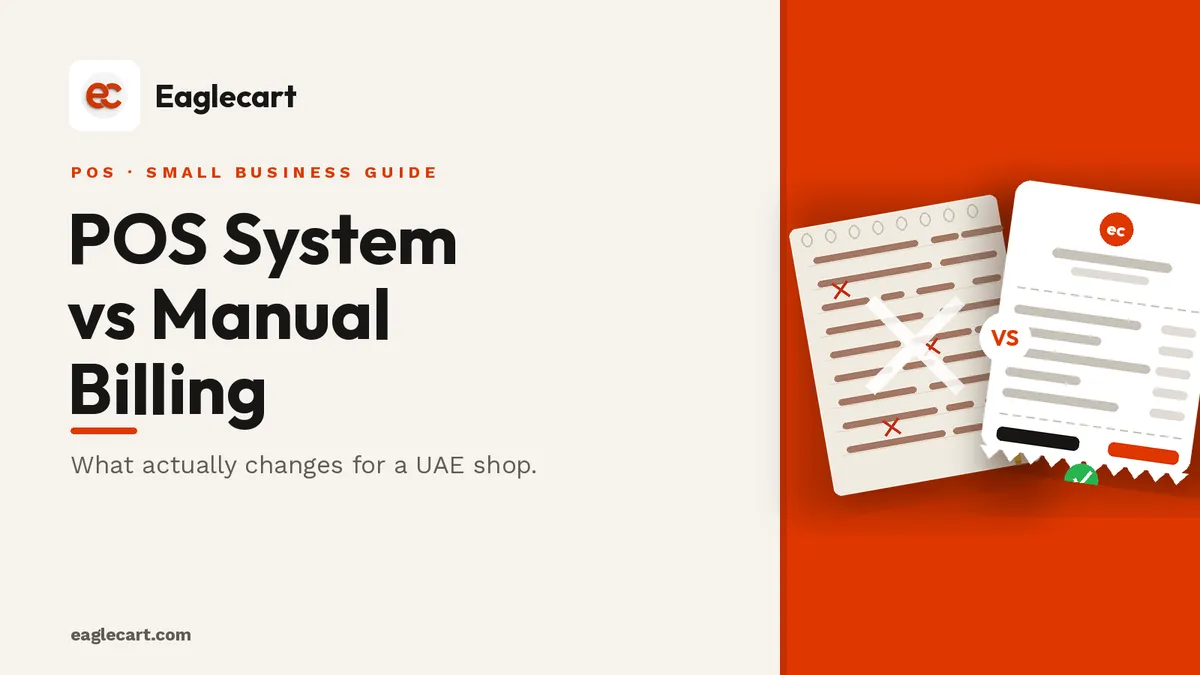
The difference between a POS system and manual billing is simple: a POS turns every sale into a fast, recorded, tax-correct transaction that also updates your stock, while manual billing leans on a pen, a calculator and your memory. For a UAE shop, that difference shows up as fewer errors, correct VAT, a stock count that matches the shelf, and a clear view of your numbers — almost always worth far more than the notebook you saved.
Manual billing feels free because you already own the pen. The cost is hidden, and it shows up later — in mispriced sales, VAT worked out wrong, and stock that says one thing while the shelf says another.
I ran on paper in the early years, and it worked until it did not. As the business grew — thousands of products, more staff, more sales in a day — the notebook stopped telling the truth. At the end of the month we would count the stock, and the count would not match what we thought we had sold. Somewhere between the handwriting, the mental maths and the memory, money was leaking. One of the hardest lessons I learned is that inventory is cash, and manual billing hides exactly how much of it you are losing.
Key Takeaways
- A POS records every sale accurately and updates stock; manual billing relies on memory and paper.
- The real cost of manual billing is hidden: pricing errors, wrong VAT, and stock that does not match the shelf.
- A POS gives you a correct VAT tax invoice every time and a clear daily view of what you sold.
- Manual billing is only fine for very small or occasional selling; a real shop outgrows it fast.
Manual billing vs a POS system: the short answer
Manual billing is a pen, a paper pad, a calculator and your memory. A POS system is software that rings up the sale, adds the VAT, takes the payment, prints or sends a receipt, and drops the item from your stock. The POS does in one tap what manual billing asks you to remember five times per sale.
At a glance, here is what changes:
- Speed: seconds per sale, instead of writing each one out.
- Accuracy: the system does the maths, instead of you doing it in your head.
- Stock: it updates itself, instead of being updated later, if you remember.
- VAT: a proper tax invoice every time, instead of a figure worked out by hand.
- Reporting: today's total in one tap, instead of adding up the pad.
Speed at the counter
Manual billing is slow in a way you stop noticing until there is a queue. Write the item, the price, add the VAT, total it, tear off a receipt — that is a minute a customer, and every second is someone deciding whether to wait.
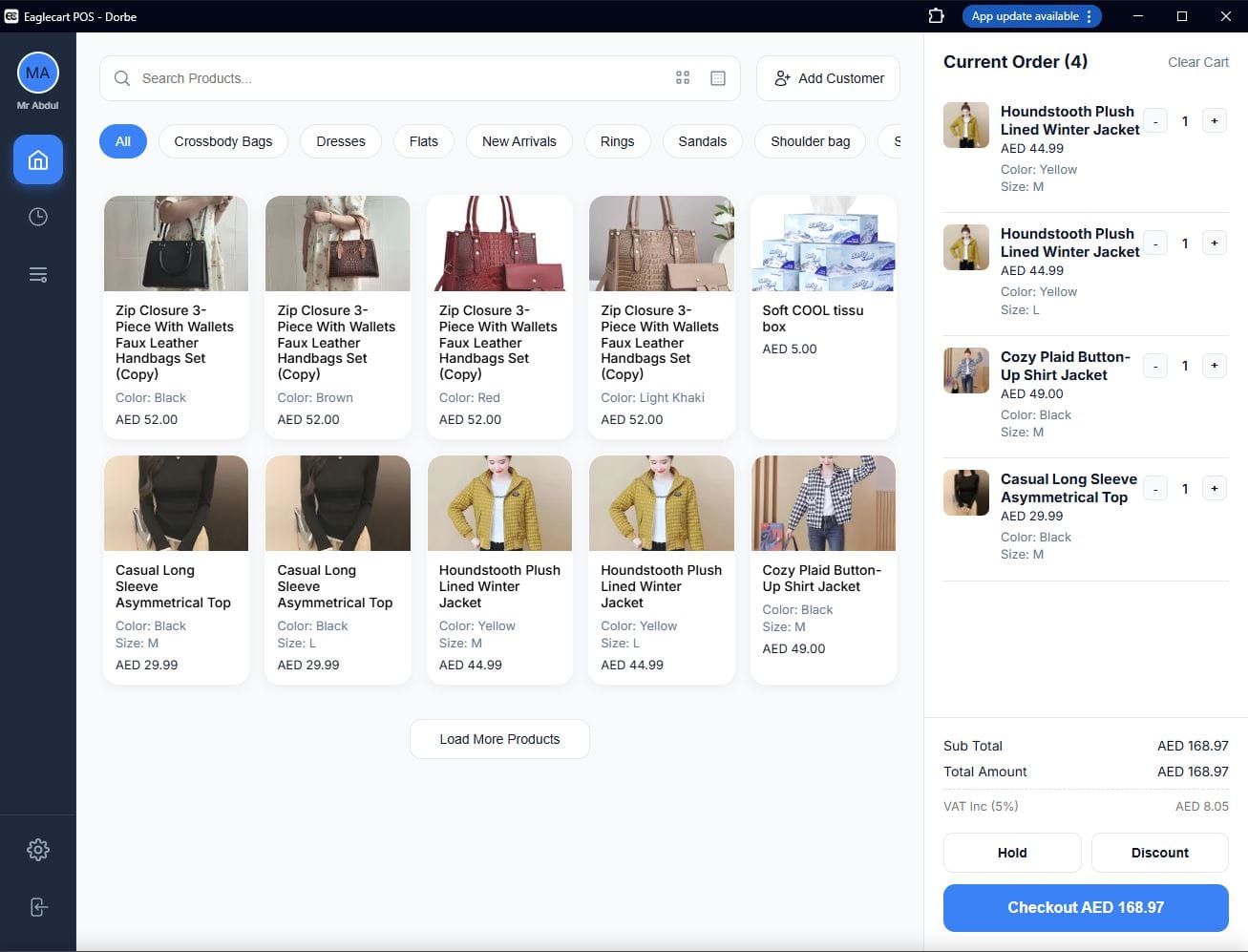
A POS removes that minute. You search or scan the product, it lands in the cart with the price and VAT already worked out, and you are ready to take payment. On a busy day that speed is the difference between serving the queue and losing it.
Errors: pricing and VAT
Every manual sale is a small maths test, and people fail small maths tests all day. A wrong price, VAT added wrong, change counted wrong — each one is money out of the till or a customer who feels cheated.
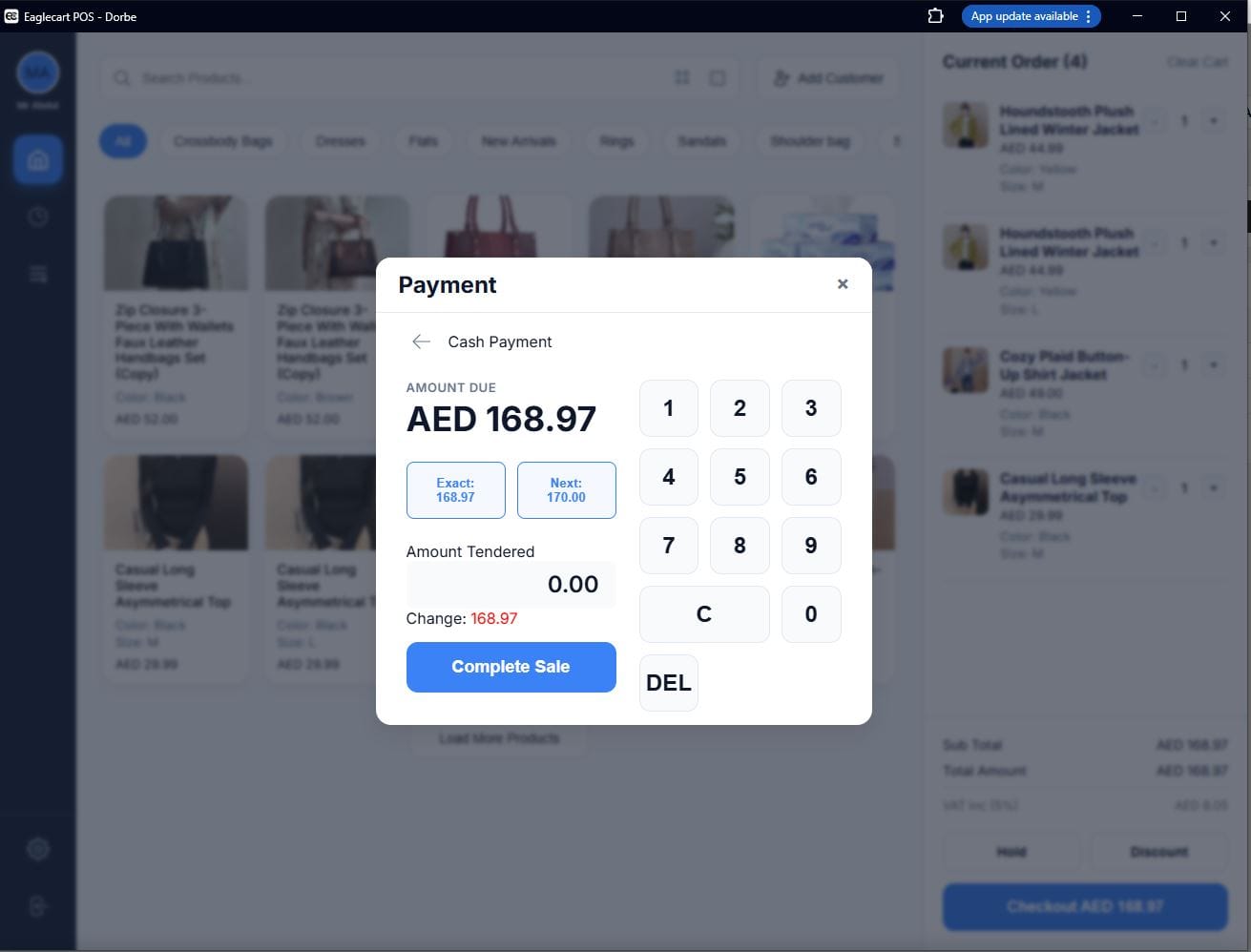
A POS does the arithmetic for you. It prices the item, adds the 5% VAT, totals the cart, and works out the exact change to return. The mistakes that quietly cost you across a month simply stop happening.
Stock accuracy: the number that quietly bleeds money
This is where manual billing costs the most, and where you notice it the least. When a sale is written on paper, the stock count in your head is already wrong, and it stays wrong until you count the shelf by hand.
A POS drops the item from your stock the instant the sale closes. With Eaglecart, the shop and the online store even share one stock number, so nothing is sold twice and nothing goes missing on paper. Inventory is cash — and a stock count that matches the shelf is the difference between knowing your business and guessing at it.
VAT and tax invoices in the UAE
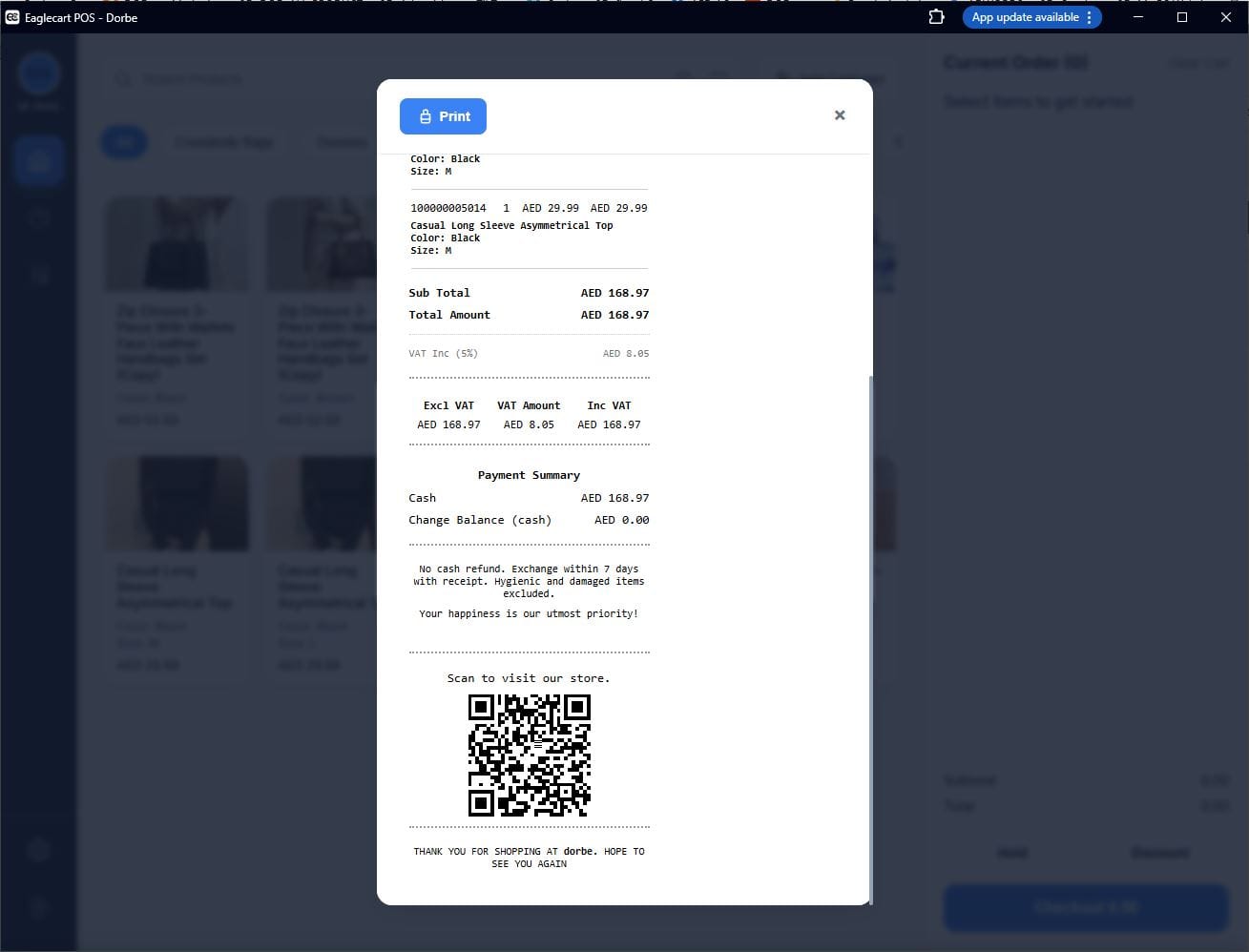
In the UAE, customers and businesses expect a proper VAT tax invoice, and a handwritten scrap often is not one. A POS issues a proper tax invoice on every sale, with your details, the items, the 5% VAT and the total, printed or shared digitally.
That keeps you compliant without doing the VAT maths by hand, and it means every customer who needs an invoice for their own records gets a clean one, every time.
Knowing your numbers at the end of the day
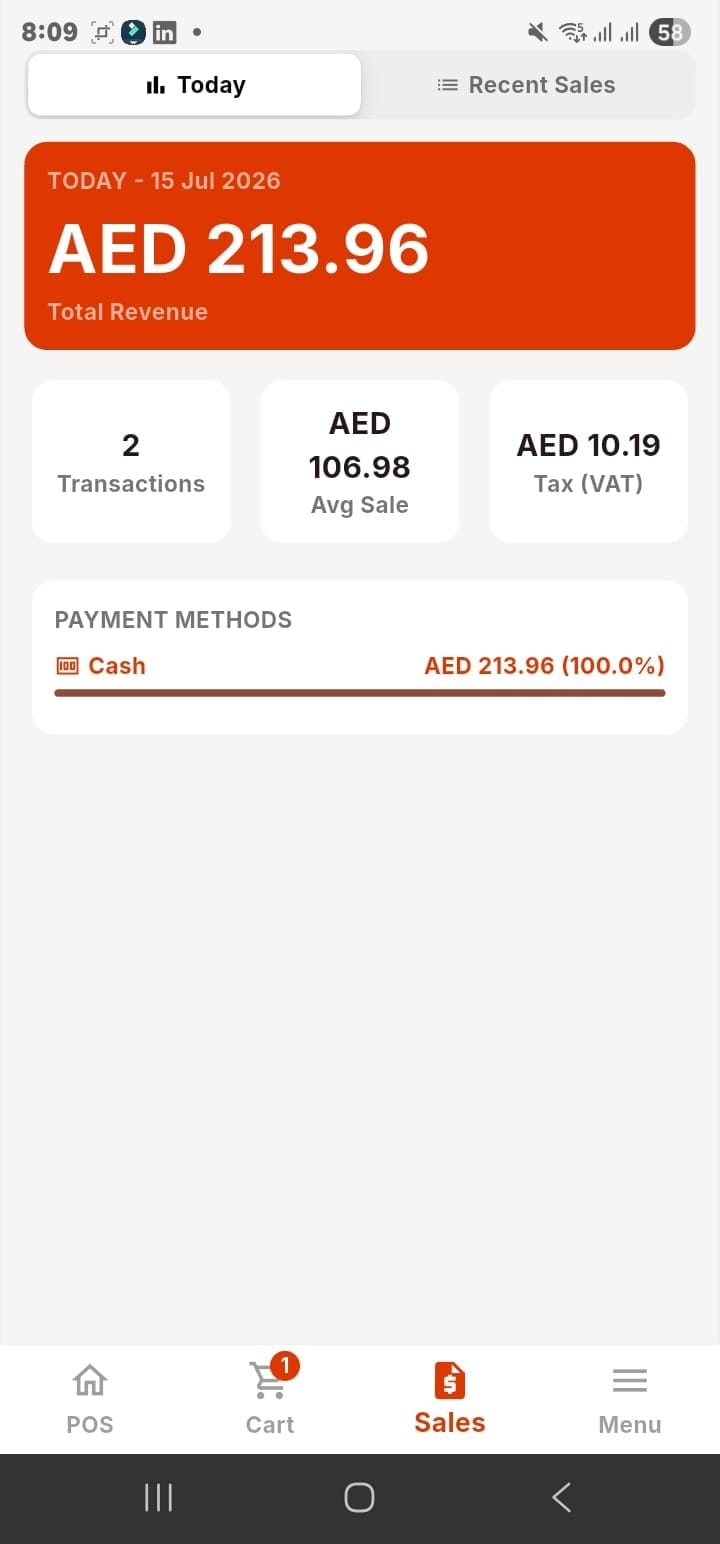
With manual billing, "how did we do today?" means adding up the pad and hoping it is right. A POS answers it at a glance — the day's revenue, the number of sales, the average sale and the VAT collected, without any counting.
That is not just convenience. When you can see your numbers clearly every day, you make better decisions about what to stock, what to promote, and where the money is actually going.
Is manual billing really "free"?
Manual billing looks free because the pen and pad cost almost nothing. But the real bill is paid in pricing errors, VAT mistakes, lost stock and time you cannot get back — and that bill is usually far bigger than a POS.
Eaglecart POS for small business is AED 49 per month for one location, and it runs on the phone or desktop you already own, so there is no machine to buy. Set against the money that leaks out of a paper till, it is a small, fixed cost that pays for itself in accuracy alone.
When manual billing is actually fine
To be fair, manual billing is not always wrong. If you sell a handful of items a week, occasionally, with no staff and no VAT to worry about, a pad is perfectly fine.
But the moment you have a real shop — a counter that gets busy, staff on the till, stock to track, VAT to charge, or sales happening online as well as in person — you have outgrown the notebook, and it has started costing you more than it saves.
How Eaglecart POS replaces the notebook
Eaglecart POS was built by someone who billed by hand first and knows exactly what breaks. It covers the real work directly: retail checkout, product search, barcode scanning, payment collection and receipt printing, with inventory synchronization so your stock stays honest on its own.
It issues VAT tax invoices, works in Arabic and English, runs on web and desktop as well as iOS and Android, and connects to the same products, customers and stock in your Eaglecart dashboard. Everything the notebook used to hold — and everything it used to lose — lives in one place instead.
Frequently asked questions
What is the difference between a POS system and manual billing?
Manual billing uses a pen, paper and a calculator, and depends on your memory to update stock. A POS system rings up the sale, adds the VAT, records it, and updates stock automatically, so nothing relies on remembering.
Is a POS system better than manual billing for a small shop?
For any shop that gets busy, has staff, tracks stock or charges VAT, yes. Manual billing only keeps up for very small or occasional selling; past that it starts causing errors and losing stock.
Does manual billing cause stock problems?
Yes. When sales are written on paper, your stock count is out of date the moment a sale happens, and stays wrong until you count by hand. A POS updates stock on every sale, so the count matches the shelf.
Can I give a proper VAT invoice without a POS in the UAE?
A handwritten receipt often does not meet what a proper tax invoice needs. A POS issues a compliant VAT tax invoice on every sale, showing the 5% VAT and your details, printed or shared digitally.
How much does it cost to switch from manual billing to a POS in the UAE?
Eaglecart POS for small business is AED 49 per month for one location, running on the phone or desktop you already own — so switching does not mean buying a machine, and it usually costs less than the errors manual billing hides.