What Is a Job Card and Why Does Every UAE Workshop Need One?
What Is a Job Card and Why Does Every UAE Workshop Need One?
A job card is the document that follows every repair or service job in a workshop from the moment a customer brings in their vehicle or device to the moment the job is complete and invoiced. It is the single source of truth for what was agreed, what was done, what parts were used, and what the customer owes.
Without a job card system, a workshop runs on memory. The technician remembers what needs to be done. The service advisor remembers what the customer was quoted. The parts manager remembers what was used. And when any one of those people is busy, sick, or has left for another job, that memory walks out with them.
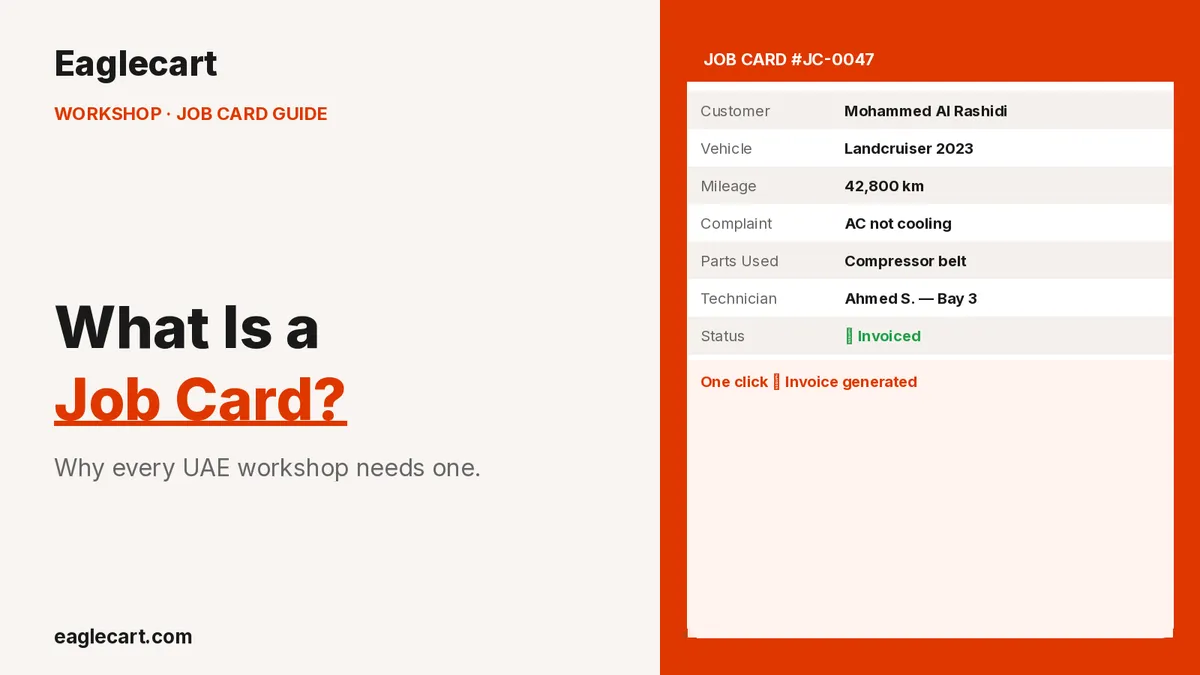
A job card records every detail of a workshop job — customer, vehicle, work requested, parts used, technician notes, and final cost.
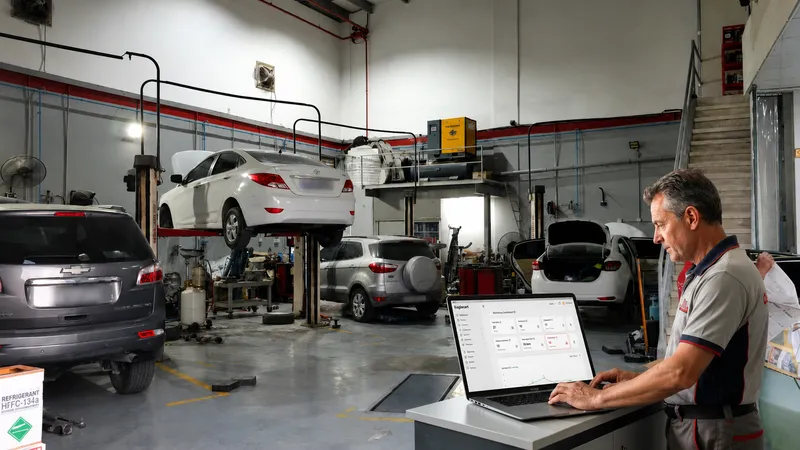
Digital job cards eliminate the lost-paper problem and give every team member real-time visibility of every job's status.
A job card that converts to a VAT invoice in one step saves significant time and prevents billing errors that lose you money.
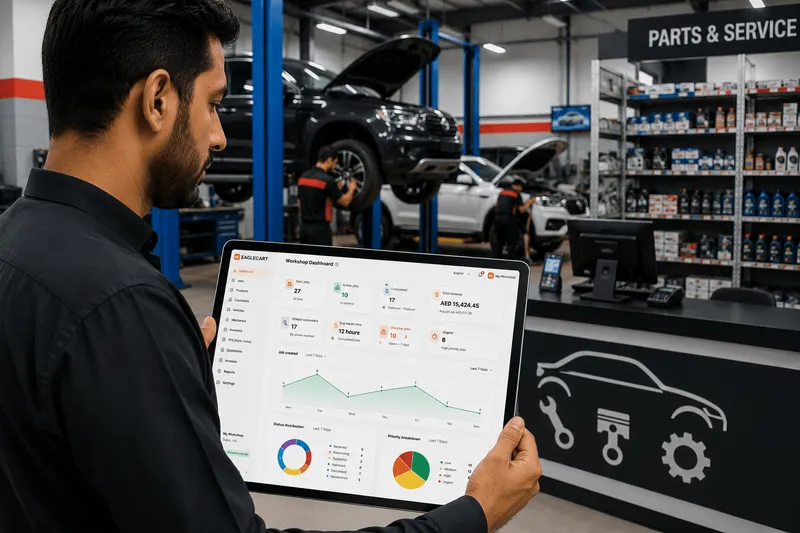
Eaglecart's workshop module manages job cards, customer history, vehicle records, quotations, and invoices in one place.
What a Job Card Must Contain
A useful job card — paper or digital — needs to capture every piece of information required to complete and invoice the job without asking the customer to repeat themselves or the technician to guess what was agreed.
The essential fields are: customer name and contact details, vehicle information (make, model, year, plate number, and mileage at intake), the complaint or work requested in the customer's own words, any diagnostic findings added by the technician, a list of parts and consumables used with quantities and costs, the estimated completion time, any customer approvals for additional work discovered during the job, technician name and time logged, and the final labour charge and total cost.
A job card that is missing any of these creates a gap. If you do not record the mileage at intake, you cannot accurately advise on service intervals. If you do not record customer approval for additional work, you face a dispute when you present a bill higher than the original estimate. If you do not capture parts usage, you cannot reconcile your parts inventory against what was used on the job.
Why Paper Job Cards Are Actively Costing You Money
I ran an electronics repair workshop before I moved into ecommerce. The transition from paper to digital systems was one I eventually applied across every part of my business — and in every case, the gains were immediate.
Paper gets lost. A job card that cannot be found is a job that cannot be invoiced accurately, a dispute that cannot be resolved with evidence, and a service history that does not exist. In a busy UAE workshop with multiple bays and multiple technicians working simultaneously, managing paper alone is a part-time job.
Paper is also single-access. Only one person can read a job card at a time. If the service advisor is speaking to a customer about the progress of their vehicle, they need to physically locate the card. If it is with the technician, the advisor is stuck. If it is at the front desk, the technician cannot reference it. A digital job card is accessible to everyone simultaneously — the advisor at the counter, the technician in the bay, the manager in the office.
And paper has no audit trail. If a dispute arises about what was agreed, a paper job card contains only what was written at intake. Nothing more. A digital system records every update — what was added, when, and by whom. That record is your protection when a customer says they never approved extra work and you know they did.
Your Service History Is What Keeps Customers Coming Back
Every time a customer brings the same vehicle back to your workshop, you should be able to pull up a complete service history in seconds. What was done last time. Which parts were replaced. What the mileage was. What was recommended but declined.
This history is the foundation of proactive service — reminding the customer that their brake fluid is due for a change, or that the air filter they declined last time is now overdue. Customers stay with workshops that know their vehicles. They leave workshops that treat every visit as if it is the first one.
Eaglecart's workshop module maintains a full service history per vehicle, so every time a customer returns, you already know the car before they explain it.
Job Card to Invoice in One Step
In a paper system, transferring information from the job card to the invoice is a manual retyping exercise — parts, labour, quantities, and prices all entered again by hand. Every manual entry is a chance to make a mistake. Every mistake is either money left on the table or a customer dispute.
On Eaglecart, a completed job card converts to a VAT-compliant invoice in one step. The parts used, labour charge, and any additional items are already recorded in the job card — the invoice is generated from that data automatically. The customer's TRN can be added for B2B invoices. The invoice is bilingual in Arabic and English. Nothing needs to be typed twice.
How Eaglecart's Workshop Module Works
When a customer brings in a vehicle, you create a new job card in Eaglecart. The customer's profile is either retrieved from your existing database or created new. The vehicle is registered with its details. The work requested is recorded. As the technician works, they update the job card with findings and parts used. If additional work is needed beyond the original scope, the customer approves it — and that approval is recorded in the system.
When the job is complete, the job card is marked as finished. The invoice is generated from the job card data. The customer signs off. Payment is collected and recorded. The service history is updated.
The entire workflow — intake, work, parts, approval, invoice, payment — lives in one place. No paper. No WhatsApp coordination. No memory required. Eaglecart workshop plans start from AED 199 per month. Visit eaglecart.com to start for free.
Run your UAE workshop without paper or guesswork
Digital job cards, vehicle service history, one-step VAT invoicing, and full customer records — all in Eaglecart from AED 199/month.
Start Free at eaglecart.comFrequently Asked Questions
What is the difference between a job card and an invoice in a workshop?
A job card is the working document that tracks everything during the repair — customer details, vehicle information, work done, and parts used. An invoice is what you present to the customer when the job is complete. On Eaglecart, the invoice is generated directly from the job card in one step — no re-entering data.
Do UAE workshops need to issue VAT invoices?
If your annual taxable turnover exceeds AED 375,000, yes — you must issue compliant tax invoices. Eaglecart converts a job card to a VAT invoice automatically, with all required fields: TRN, VAT amount, sequential invoice number, and bilingual labelling.
How does a digital job card help with customer disputes?
A digital job card records every update with a timestamp — what was agreed at intake, what was discovered during the job, what additional work the customer approved, and what was billed. That audit trail is your evidence. A paper job card only has what was written at the start.
Can Eaglecart store a vehicle's full service history?
Yes. Each vehicle is registered and linked to all job cards completed on it. When a customer returns, you pull up the full history instantly — every job, every part replaced, every recommendation made. That is what builds the kind of trust that keeps customers from going to a competitor.
Is a workshop management system complicated to set up?
Eaglecart's workshop module is designed for workshop owners, not software engineers. Set up your service categories, add your parts inventory, configure your pricing — and most workshops are processing their first digital job card within a day. No technical background required.
What types of UAE workshops benefit most from a job card system?
Auto workshops and car repair centres benefit most, but the system also suits electronics repair shops, appliance service centres, and any service business where customer items are taken in for repair and returned. The core need — tracking work from intake to invoice — is the same across all of them.